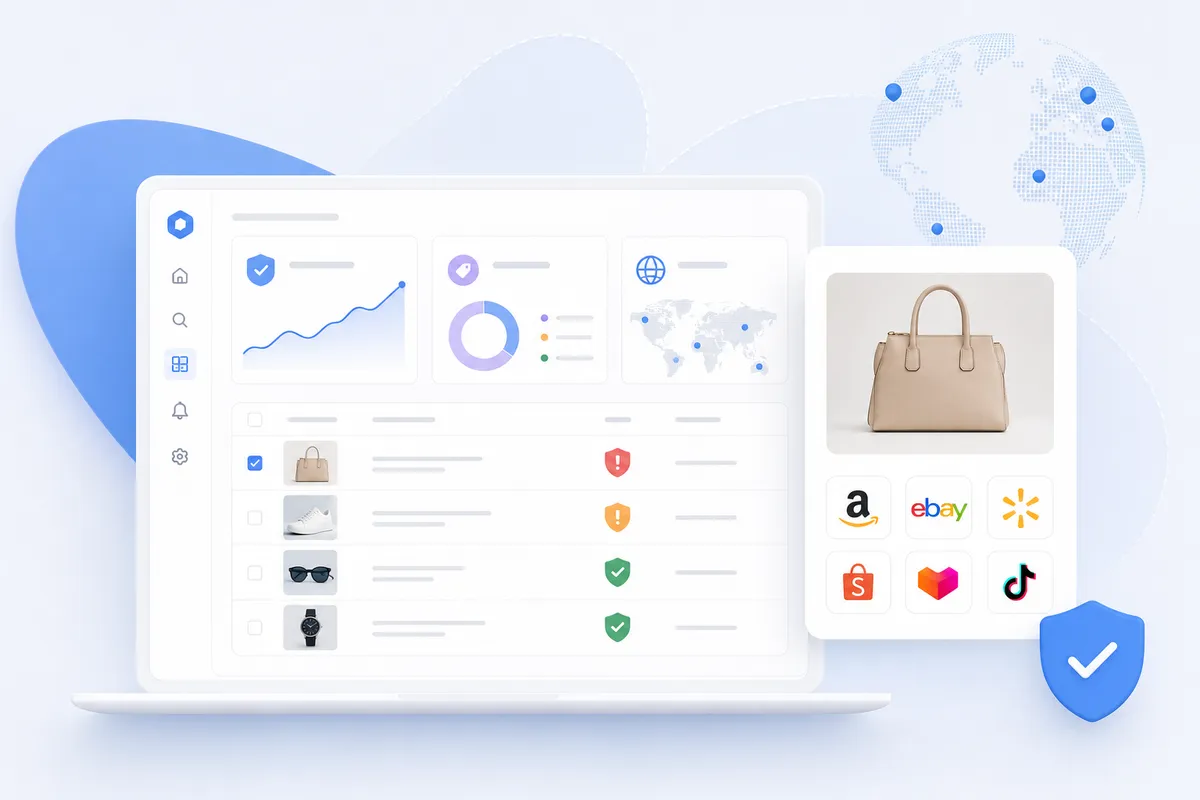
We’re Losing Control of What Customers See Online
What e-commerce and marketing leaders at ShopTalk 2026 told me about losing control of their channels with fakes.
 Mark Lee4 min read

On this page2
I spent some time this spring at ShopTalk speaking with dozens of e-commerce, marketing, and brand leaders at leading companies. One conversation stuck with me: An e-commerce leader at a fast-growing DTC brand told me she feels “helpless” watching fraud spread online faster than her team can respond. Another brand told me they were worried that fraudsters would retaliate against takedowns and they’d lose buy box control.
In conversation after conversation, leaders shared a similar feeling: they’re losing control over what customers see about their brand online, and it’s happening faster than ever.
Nobody at ShopTalk was sorting fakes into neat buckets.
For these leaders, the problem isn’t neatly categorized as “counterfeiting” or “impersonation.” They see one outcome: fakes showing up across the internet, confusing customers, stealing traffic, and hurting revenue. AI has made it dramatically easier for bad actors to spin up convincing sites, ads, and social profiles in hours.
What surprised me most was where the urgency actually showed up. Brands were far more concerned about protecting channels like websites, social media, and paid ads than counterfeit listings on marketplaces. That’s because impersonation is just as damaging, and often more immediate. This new breed of bad actors intercept high-intent shoppers, hijack paid and organic traffic, and create a broken customer experience that the real brand ends up paying for – all within days of a campaign launch.
And the people raising this most urgently were e-commerce and marketing operators, the ones who own conversion, ROAS, and customer trust, not legal teams. When a scam ad diverts traffic or a fake site wins the click, or unauthorized sellers dominate a marketplace, the impact shows up directly in their dashboards. They see and live with the problem every day.
What we’re building at MarqVision, and why
That frustration is exactly what shaped how we think about our product. Because impersonation shows up everywhere — fake sites in search, scam ads on Google, cloned profiles on social — we are building MarqVision to protect across each of those channels: marketplaces, social platforms, paid ads, and websites. Instead of asking teams to figure out whether something is a “counterfeit” or an “impersonation,” we detect and enforce across every surface where fakes reach customers.
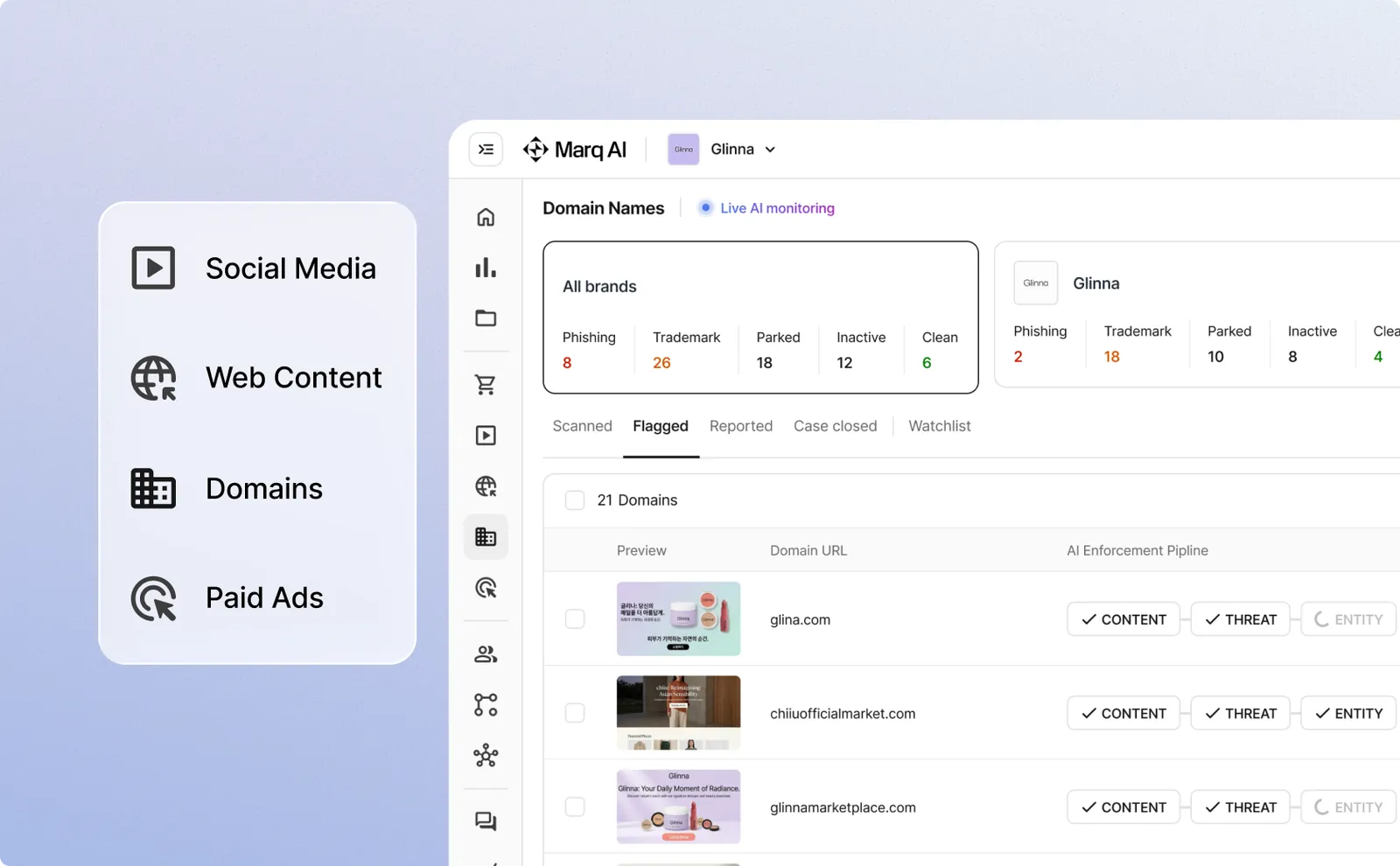 Protect your brand from fakes across every channel. Marq AI detects and removes fakes across domains, ads, social media, and content.
E-commerce and marketing teams don’t have the luxury of waiting days to act, and they have zero patience for systems that surface endless alerts with no clear path to resolution. But speed alone isn’t enough. When you’re taking down domains or ads tied to your brand, every action needs to be precise and defensible.
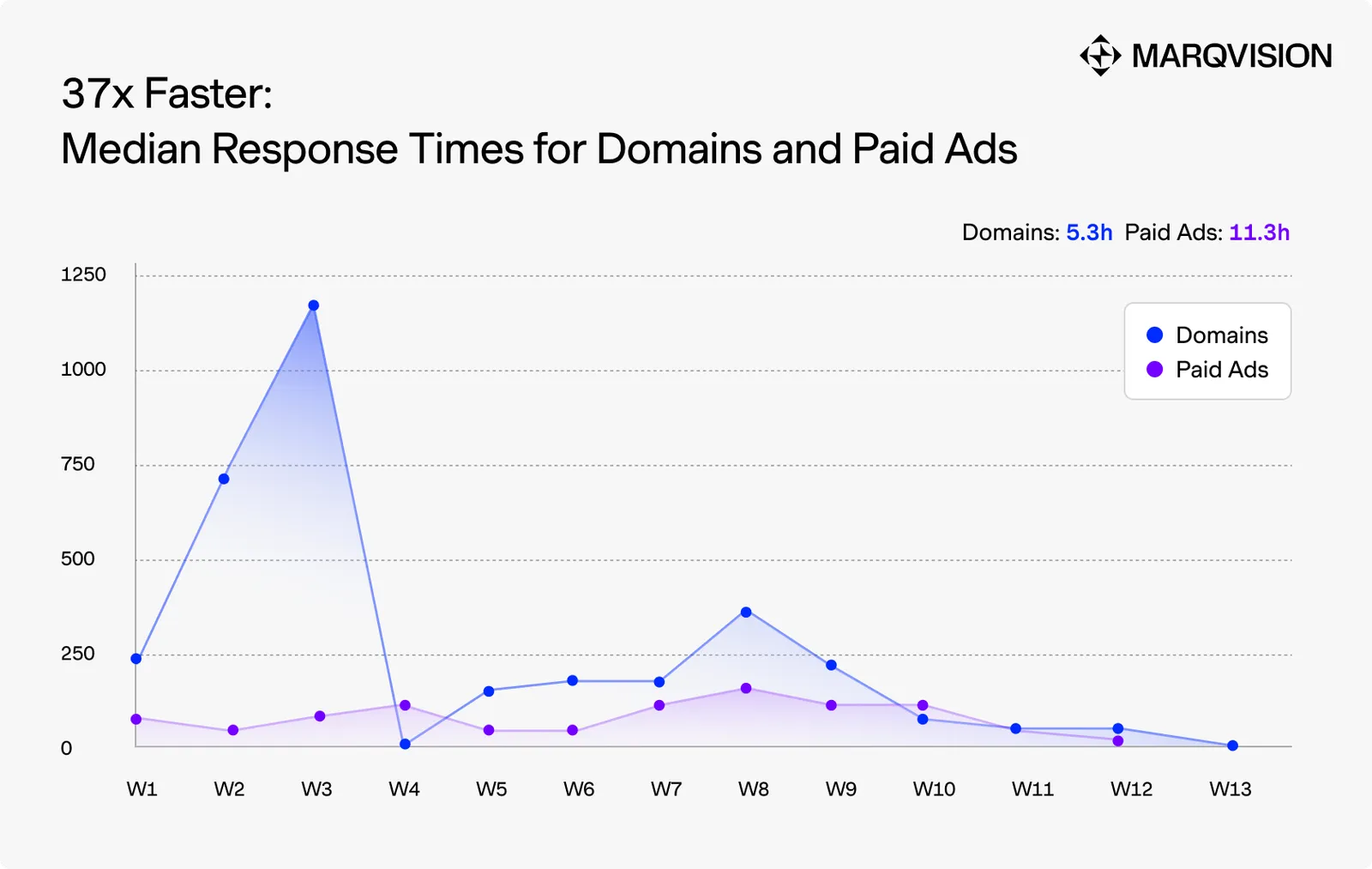
Over the past two quarters, our engineers have driven takedown times down by 37x:
- Fake domains: ~5 hours median response time
- Fake ads: ~11 hours median response time
- Decision accuracy: 99.8% across 50K+ incidents during beta, higher than the 95% benchmark with humans-in-the-loop.
For context, most brands today are still operating on takedown timelines of two to eight days depending on the channel and vendor. By the time a fake site or ad comes down, the damage is already done: traffic has been siphoned, conversions lost, and customers left with a broken experience they blame on the real brand.
It was clear to me at ShopTalk that e-commerce and marketing teams want brand intelligence, market data, and real visibility into what’s happening across their channels. Most feel like they don’t have that today. That’s what we’re building MarqVision to be: a single platform where e-commerce, marketing, and legal all work from the same playbook.
If any of this sounds familiar, I’d love to hear how your team is thinking about it.