The New Economics of Brand Integrity: What the Data Says in 2026
New data from MarqVision’s 2026 State of Brand Integrity Report reveals how AI-driven counterfeits and impersonation are reshaping brand protection. Discover the revenue impact, why takedown metrics are failing, and how leading brands are shifting to outcome-based measurement.
 Abby Lin4 min read
On this page5
Brand protection is no longer a background operational function. In 2026, it has become a measurable economic lever: one that directly impacts revenue, demand stability, and brand trust.
New data from MarqVision’s 2026 State of Brand Integrity Report, based on insights from 96 brand leaders, shows an industry at a clear inflection point. While threats have accelerated dramatically, the way brands measure and manage protection is starting to change.
AI Has Changed the Cost Structure Of Growth
One of the most striking findings from the research is how widespread AI-enabled threats have become.
- 85% of brands report experiencing AI-accelerated threats, including fake listings, impersonation accounts, and synthetic brand assets
- 82% say counterfeit and impersonation issues are worse than two years ago
Generative AI has lowered the barrier to imitation. High-fidelity replicas of products, storefronts, domains, and marketing assets can now be created on-demand, often surfacing within days, or even hours, of a legitimate campaign or viral moment.
The result is what many brand leaders now recognize as an “AI tax” on growth: marketing still drives demand, but a portion of that demand is silently diverted before it reaches authorized channels.
Viral Moments Now Trigger Instant Exploitation
Speed is now one of the defining risk factors.
According to the data:
- 57% of brands see fake accounts or websites appear within one week of a viral moment
- 24% see impersonation within just 24–48 hours
Impersonation often arrives first, because it requires no physical production, only a domain or social account. Counterfeits follow shortly after, extracting even more value.
This matters because the financial impact is no longer marginal: in fact, 78% of brands estimate losing 5% or more of annual revenue to counterfeits and impersonation combined
Why Takedown Metrics Are Breaking Down
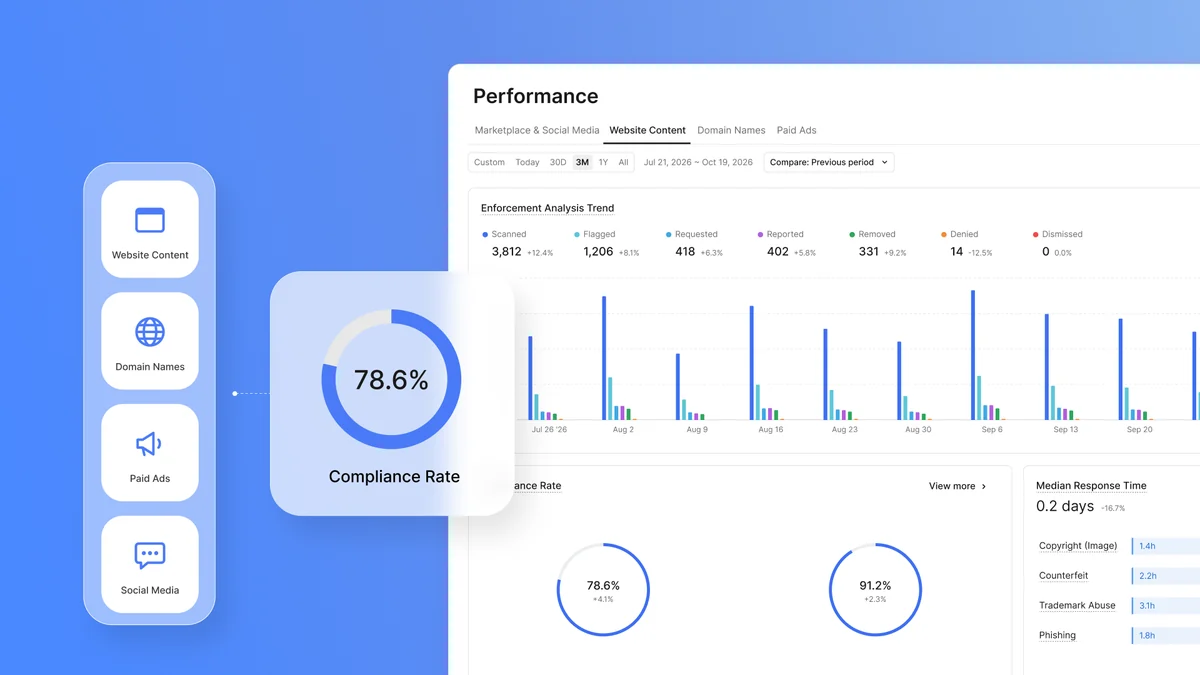
Despite rising losses, many organizations are still measuring brand protection by activity rather than impact.
- 50% still prioritize takedown counts as their primary metric
- Only 35% actively track revenue recovered or protected
This creates a paradox: higher takedown volume often signals a larger underlying problem, not progress. Faster removals don’t necessarily mean cleaner search results, safer customers, or stabilized demand.
An Industry at an Inflection Point
The research reveals a clean divide in how brands define success.
- 50% prioritize revenue protected
- 50% still prioritize total takedowns executed
- 85% agree brand protection should shift to revenue and business outcomes
This gap between where brands want to go and where they actually are represents both risk and opportunity. Brands that make the shift first gain clearer visibility into exposure, stronger executive alignment, and a more defensible case for investment.
The Full Picture
These insights are just a snapshot.
Our 2026 Brand Integrity Report goes deeper into:
- How leading brands are quantifying revenue loss and recovery
- The metrics replacing takedown volume
- What differentiates teams that have transformed enforcement from those still stuck in reactive mode
- Where brand protection is heading as AI-driven discovery becomes mainstream
Want to learn more? Check out the full Brand Integrity Report here.